Guide · 2 min read ·
Trains and Shinkansen: Manners and Luggage
Japanese trains are quiet, on time and full of small rules everyone follows without thinking. Here they are, plus the one luggage rule that can cost you ¥1,000 on the shinkansen.
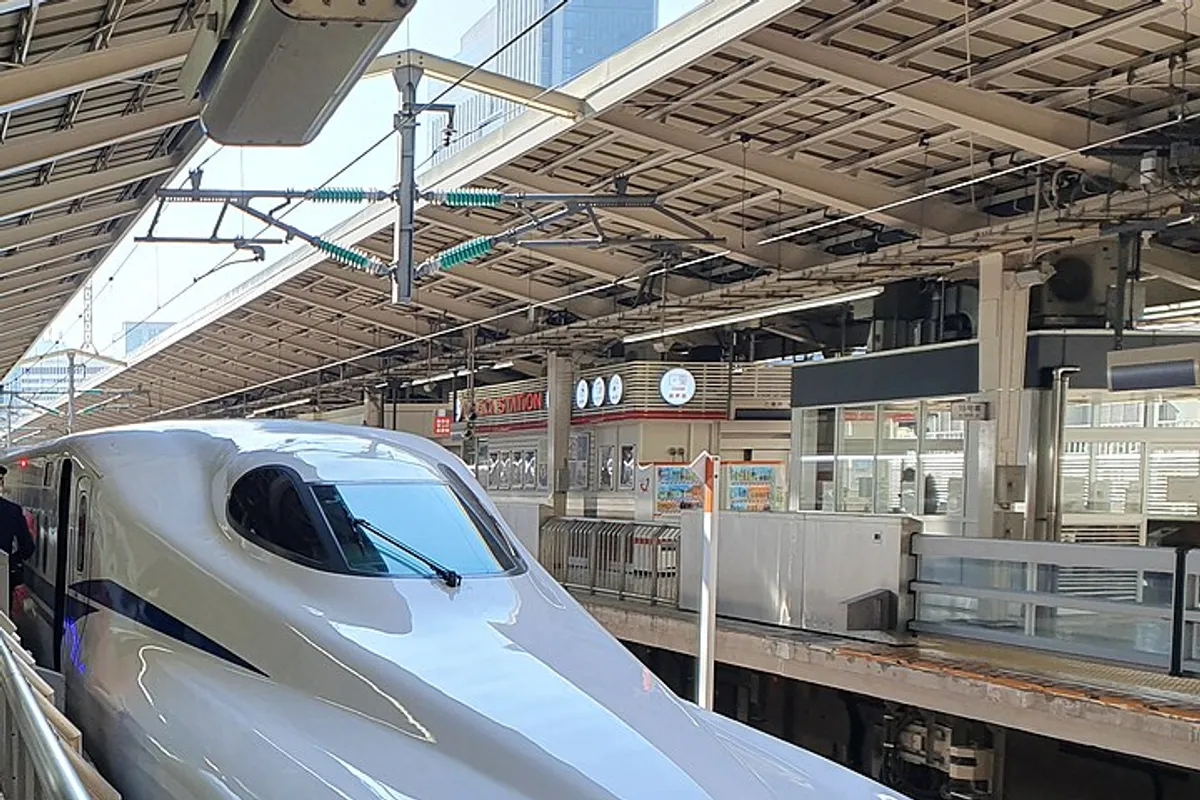
In short
- Queue at the marks on the platform; let people off first.
- Keep your voice down and your phone silent. No calls on board.
- Eating is fine on the shinkansen, not on commuter trains or the metro.
- Tokaido, Sanyo and Kyushu shinkansen: a bag over 160 cm (L + W + H) needs a reserved seat with a luggage area.
How to wait on the platform
Marks painted on the platform show where each door stops. People queue in lines beside them and let everyone off before they get on.
- Join the end of the queue, don’t crowd the door.
- In a crowded car, wear your backpack on your front or put it on the rack.
- Move inside, away from the doors, if you’re not getting off soon.
Quiet, phones and calls
Trains are quiet. Talk softly, put your phone on silent (“manner mode”) and don’t take calls on board.
Tip: On the shinkansen, step out into the deck between the cars to make a call.
Can you eat on the train?
| Shinkansen, reserved-seat expresses | Commuter trains, metro | |
|---|---|---|
| Eating | Yes: buy an ekiben at the station | Better not |
| Drinks | Yes | A sip from a bottle, if you must |
| Rubbish | Take it off with you, or use the bins on board | Take it with you |
Reclining your seat? A quick look or a word to the person behind is enough. Put it back up when you leave.
Big suitcases on the shinkansen
On the Tokaido, Sanyo, Kyushu and Nishi-Kyushu shinkansen, add up a bag’s length, width and height.
160 cm — Up to this, no booking needed: under your feet, on the rack or in the deck
- 161–250 cm: book a “seat with an oversized baggage area”, the same price as a normal reserved seat.
- Without one, the conductor charges ¥1,000 and tells you where to put it.
- Over 250 cm: the bag can’t go on board at all.
Important: The rule is checked on board. If seats with a luggage area are sold out, you may be asked to take a later train.
Who the priority seats are for
Seats near the doors marked as priority seats are for older passengers, people with disabilities, pregnant women and people with small children. If you’re sitting there, give the seat up as soon as someone needs it.
Sources
- Oversized baggage on the shinkansen — JR Central
- Etiquette on trains — JR East
- How to enjoy Tokyo: manners and customs — Tokyo Metropolitan Government
- Japanese customs and etiquette — JNTO
Read next
Plan your days
The planner shows these tips at each stop of your trip, offline too.

