Guide · 2 min read ·
Japanese Phrases for the Trip
Twenty phrases cover most of a trip: getting someone’s attention, thanking them, ordering, paying, asking the way. Said badly, they still work, and if you’re unsure, show the screen.
In short
- “Sumimasen” is excuse me, sorry and “waiter!” in one.
- “Arigatō gozaimasu” is thank you; “onegai shimasu” is please, when asking for something.
- Long vowels (ō, ā) are held twice as long; “desu” and “shimasu” lose their final u.
- The planner’s Phrases screen shows each one in large type, to turn to whoever you’re talking to.
The basics
If you learn only one word, make it sumimasen: it gets attention, apologises and thanks.
| すみません | sumimasen | Excuse me; to call the waiter |
| ありがとうございます | arigatō gozaimasu | Thank you |
| お願いします | onegai shimasu | Please (asking for something) |
| 大丈夫です | daijōbu desu | It’s fine / no, thank you |
| 分かりません | wakarimasen | I don’t understand |
| 英語が話せますか | eigo ga hanasemasu ka | Do you speak English? |
Hello, good morning, good evening
| おはようございます | ohayō gozaimasu | Good morning |
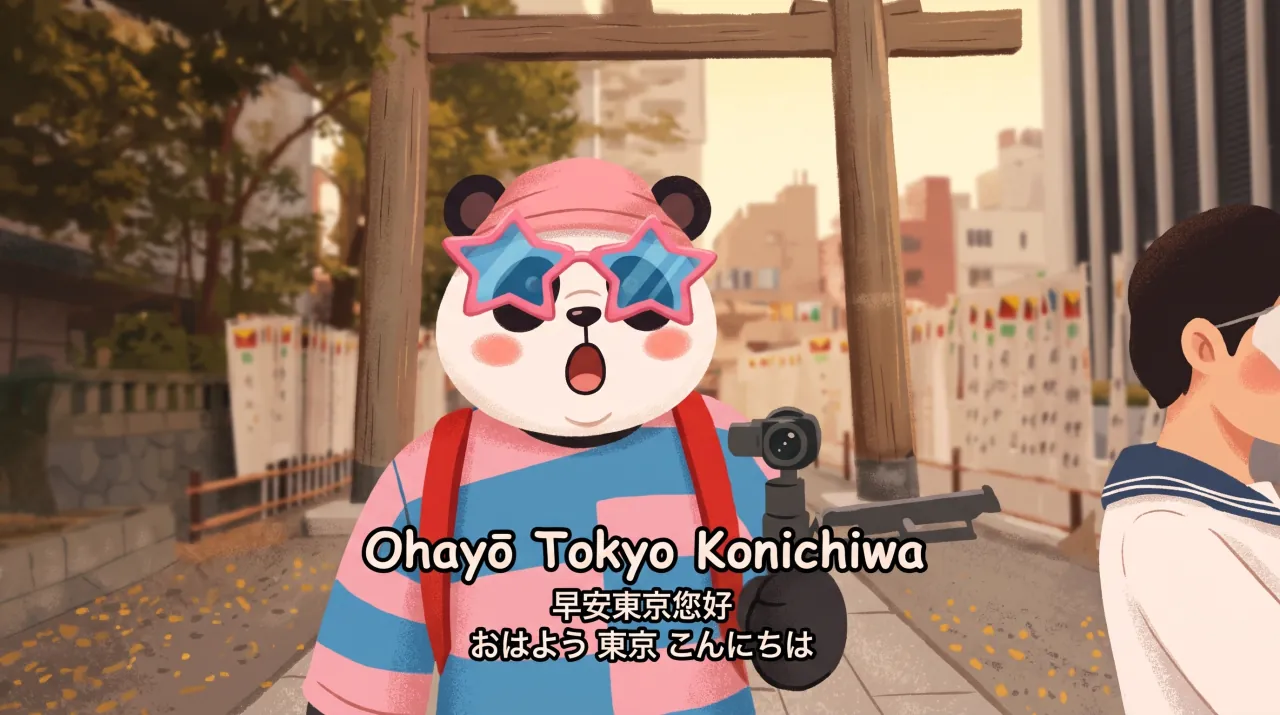
| こんにちは | konnichiwa | Hello (and on the trail) |
| こんばんは | konbanwa | Good evening |
How locals do it: On a mountain trail people greet everyone they pass with a “konnichiwa”. Answer it the same way.
At a restaurant
| 二人です | futari desu | Two of us (at a restaurant door) |
| 予約しています | yoyaku shite imasu | We have a booking |
| いただきます | itadakimasu | Said before eating |
| ごちそうさまでした | gochisōsama deshita | Said after eating, or leaving a restaurant |
| お会計お願いします | okaikei onegai shimasu | The bill, please |
| カードで大丈夫ですか | kādo de daijōbu desu ka | Can I pay by card? |
Tip: Show the number with your fingers at the door as you say “futari desu”: two of us.
In shops and on the way
| これください | kore kudasai | This one, please |
| これはいくらですか | kore wa ikura desu ka | How much is this? |
| 袋はいりません | fukuro wa irimasen | I don’t need a bag |
| 写真を撮ってもいいですか | shashin o totte mo ii desu ka | May I take a photo? |
| トイレはどこですか | toire wa doko desu ka | Where is the toilet? |
How to say them
- A long vowel, written ō or ā, is held twice as long: tōkyō.
- “Desu” and “shimasu” sound like “dess” and “shimass”.
- Every syllable gets about the same weight; there’s no strong stress.
Not sure? Open Phrases in the planner, tap a phrase and show the screen. It works without a signal.
Sources
Read next
Plan your days
The planner shows these tips at each stop of your trip, offline too.
