Guide · 4 min read ·
Temples and Shrines in Japan: How to Visit
A shrine is the home of a kami, a Shinto spirit; a temple is Buddhist. The gate tells you which is which, and the manners are almost the same, except for the clapping.

In short
- Bow at the torii and walk at the side of the path: the middle is for the kami.
- At the water basin, rinse the left hand, the right, then the mouth — from your palm, not the ladle.
- At a shrine: two bows, two claps, a prayer, one bow. At a temple: hands together, no clapping.
- Shoes come off in halls, and photos are often banned inside. Follow the signs.
Shrine or temple: how to tell
Look at the gate. A shrine has a torii: two posts and two crossbeams, often vermilion. A temple has a roofed gate, often with guardian statues.
| Shrine (jinja, -gu, taisha) | Temple (-ji, -dera, -in) | |
|---|---|---|
| Gate | Torii | Roofed gate (mon) |
| Religion | Shinto | Buddhist |
| Prayer | Two bows, two claps, one bow | Hands together, no clapping |
| Inside | Mirror, sacred rope | Buddha statues, incense |
Many places have both side by side, so check the name: Meiji Jingu is a shrine, Senso-ji a temple.
How to walk through a torii
A torii is the door to the kami’s home. Give a small bow before you go through, and walk to one side: the middle of the path is the kami’s.
- Bow once, briefly, before the gate.
- Keep to the left or right of the approach.
- Leaving, you can turn round and bow again.
Common mistake: Stopping in the middle of a torii tunnel for a photo. At Fushimi Inari the path is narrow: step aside and let people pass.
How to wash at the temizuya
Before you pray, you purify your hands and mouth at the water basin. One scoop of water does all of it.
Take the ladle in your right hand, scoop water and pour it over your left hand.

Swap hands and pour over your right.

Pour a little into your left palm and rinse your mouth. Spit it out beside the basin, not into it.

Tip the ladle upright so the last water runs down the handle, and put it back.

Common mistake: Drinking from the ladle, or touching it to your lips. The water goes from your palm to your mouth.
How to pray at a shrine
At the hall, drop a coin into the offering box and ring the bell if there is one. Then comes the part to remember.
2 · 2 · 1 — Two bows, two claps, one bow
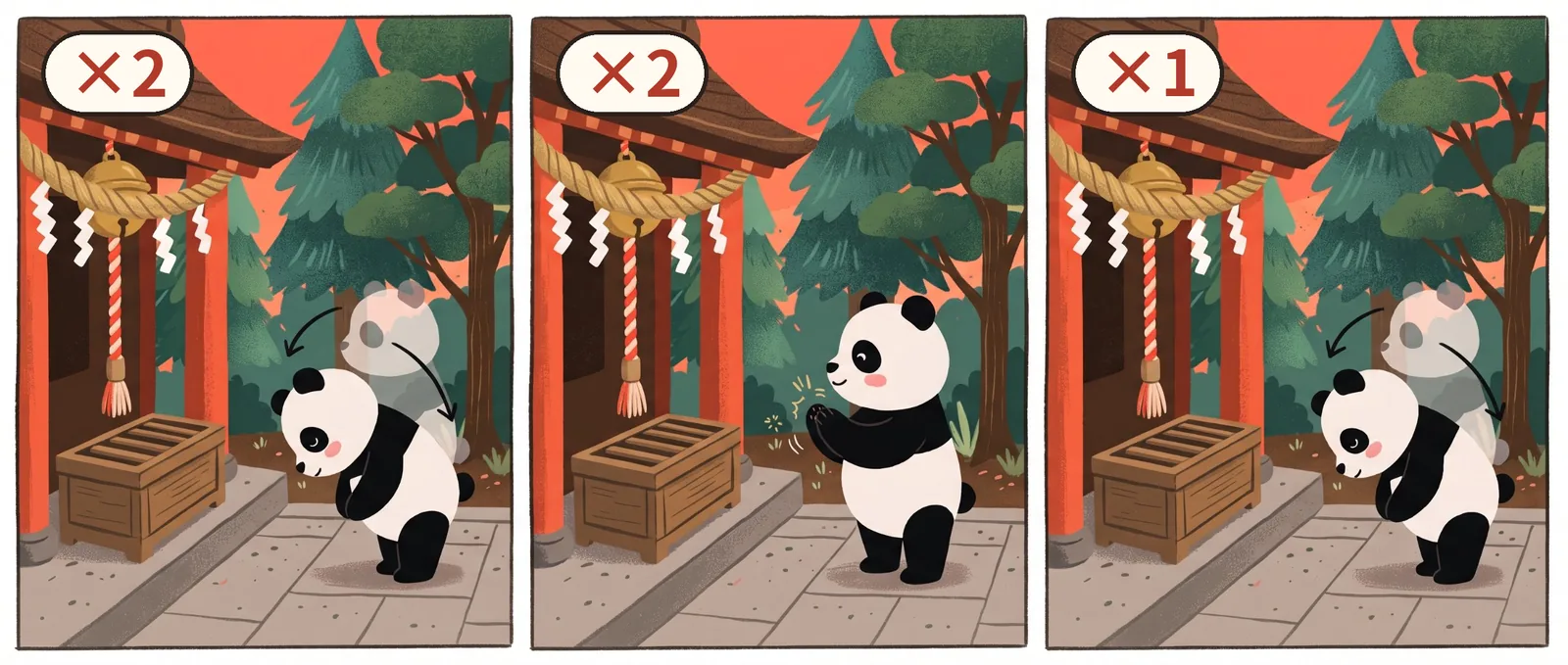
Make the prayer short and silent, with your hands together after the claps. The claps greet the kami; they are a shrine thing only.
How to pray at a temple
At a temple it’s simpler: a coin, hands together, a quiet prayer, a bow. No clapping.
Tip: If the temple has a water basin, wash first, exactly as at a shrine.
Incense and the smoke
Many temples sell bundles of incense by a big burner. Light yours, let it burn a moment, then put the flame out by waving your hand, not by blowing on it.
How locals do it: People waft the burner’s smoke over themselves with their hands — over the head, the shoulders, wherever hurts. It’s said to be good for your health. Senso-ji is the famous one.
Omikuji: what to do with a bad fortune
Omikuji are paper fortunes, usually a coin or two each. A good one you can keep. A bad one is folded and tied to the strings or board set up for it, and left behind.
Goshuin: the temple stamp
A goshuin is a seal and calligraphy written into a special book, the goshuincho. It records a visit, so it isn’t a souvenir stamp: pray first, then ask. It usually costs ¥300–500, in cash.
Photos and shoes
Do
- Take your shoes off where a hall asks: there are shelves or bags at the door.
- Photograph the grounds and the gates.
- Wear socks you’re happy to be seen in.
Don’t
- Photograph inside halls with a no-photo sign.
- Linger at the altar when others are waiting.
- Sit or climb on statues and stones.

Okunoin, Koyasan: Bow before Ichinohashi, the bridge into the cemetery. Past Gobyobashi, nearer Kobo Daishi’s mausoleum, photos, food and drink aren’t allowed.
Questions
Can I visit a shrine if I’m not Shinto?
Yes. Shrines and temples welcome everyone; doing the bow and the washing is a sign of respect, not of belief.
Do I have to pay to enter?
Grounds are usually free. Some halls, gardens and treasure houses charge an entry fee.
Sources
- Shrine and temple traditions — JNTO
- Omikuji fortune slips — JNTO
- Collecting goshuin — JNTO
- Okunoin — JNTO
Read next
- Etiquette in Japan, the Short Version
- Nara’s Deer: How to Feed Them, and Where to Start
- Japanese Phrases for the Trip
Plan your days
The planner shows these tips at each stop of your trip, offline too.


